America’s Gulf war machine: What we know about the US military network in the Middle East
US aggression against Iran would have been impossible without US military bases on the territories of the Gulf monarchies. These bases serve as the key footholds for deploying America’s offensive capabilities. US military presence in the region has long been a strategic cornerstone of American policy. Its goal is to ensure the security of global oil supplies, protect allies, and deter regional threats, which, according to the US-Israeli narrative, emanate mainly from Iran.
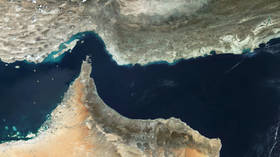
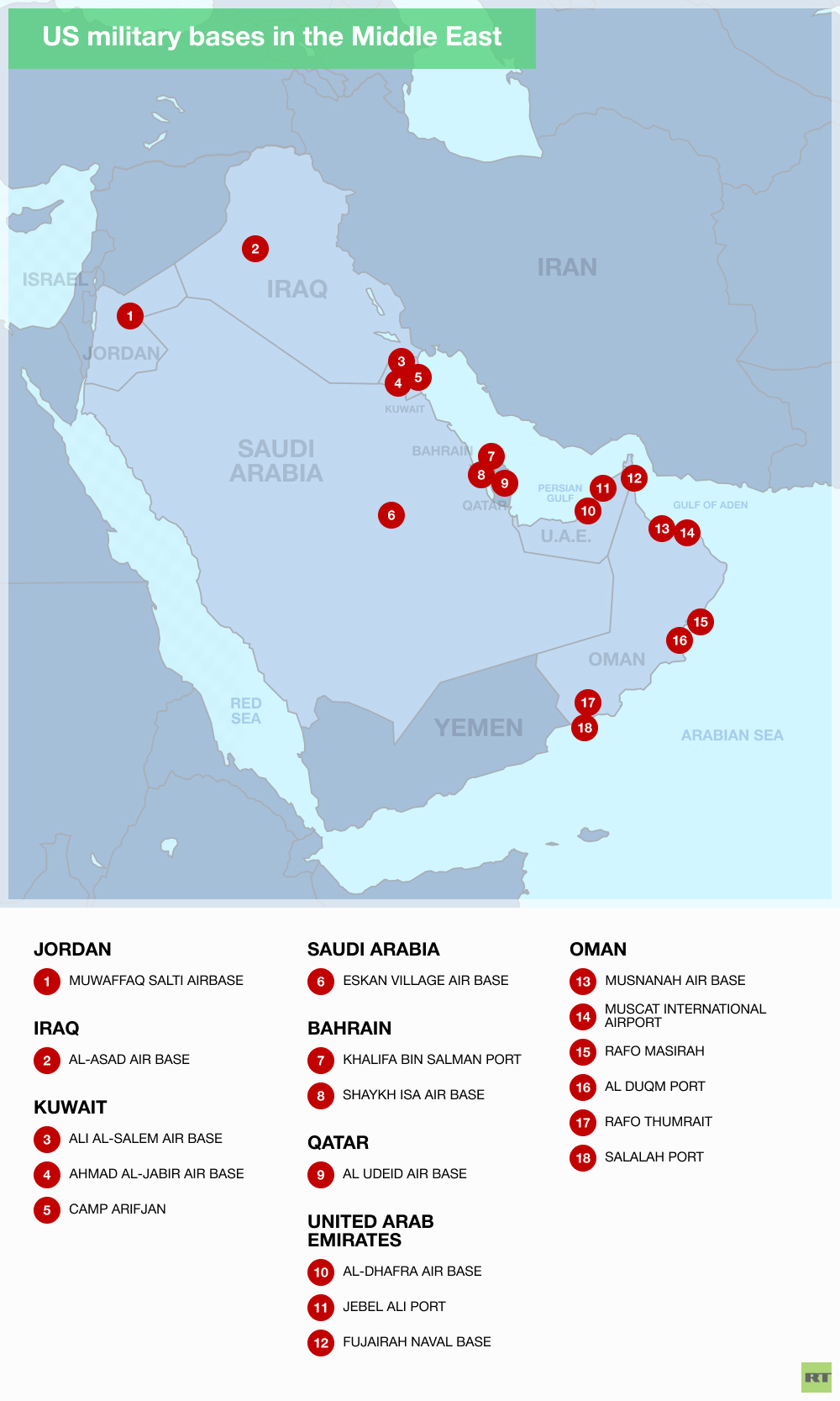
The US Navy’s Fifth Fleet is a cornerstone of American military presence in the region. Its operations span the Persian Gulf, the Strait of Hormuz, and the surrounding waters. Key bases are located in Bahrain, Qatar, Kuwait, the UAE, Saudi Arabia, and Oman and include military headquarters, critical infrastructure facilities, logistical hubs, air bases, and seaports. Ahead of Operation Epic Fury against Iran, the US anticipated retaliation and significantly reduced the number of troops and support staff at these bases. However, the deployment of additional offensive forces and missile defense systems have led to a significant US military buildup in the region.
US Navy’s Fifth Fleet
The Fifth Fleet was reactivated in 1995 following Operation Desert Storm against Saddam Hussein’s regime in Iraq. It became clear that in such an unstable region, the US Navy had to maintain a constant presence – to support “democracy and freedom” as America put it. Today, the Fifth Fleet oversees operations across an area of 2.5 million square miles – from the Persian Gulf to vast portions of the Indian Ocean.
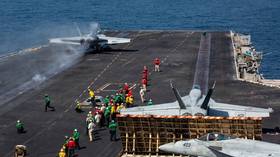
The fleet’s headquarters are located in Bahrain at the central base of the US Navy in Manama, known as Naval Support Activity Bahrain (NSA Bahrain). Located in the Juffair district, NSA Bahrain encompasses several city blocks, including warehouses, command centers for communications and intelligence, a baseball field, and housing facilities. The base coordinates fleet operations, including carrier strike groups like the USS Abraham Lincoln, Arleigh Burke-class destroyers, frigates, and submarines operating within the Fifth Fleet’s area of responsibility.
The Fifth Fleet previously participated in operations Earnest Will (carried out in 1987-1988; focused on ensuring the safe passage of oil tankers) and Praying Mantis (carried out in 1988; strikes on Iranian oil platforms in the Persian Gulf). The fleet also took part in the Iraq War in 2003 and operations against ISIS and the Yemeni Houthis. Naturally, the Fifth Fleet is now directly involved in Operation Epic Fury against Iran.
Bahrain: NSA Bahrain
The central base of the US Navy and the primary command center NSA Bahrain is simply marked on maps as “US Naval base.” The US Navy inherited the base from the British fleet in 1971. Shortly after the re-establishment of the Fifth Fleet in 1995, its headquarters became situated here. Adjacent to it is a logistics center with a port, hangars, and a hospital – the Khalifa Bin Salman Port, named in honor of Bahrain’s late prime minister (1935-2020). NSA Bahrain borders this port, through which all Fifth Fleet cargo is processed.
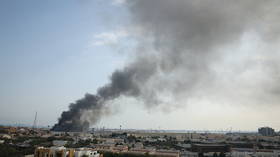
The American presence at NSA Bahrain is significant, with up to 8,500 personnel stationed there during peacetime. However, due to the ongoing combat operations, that number has been reduced to around 1,000 personnel. The base hosts US Navy destroyers and aircraft carriers, and is protected by the navy’s air defense forces and Patriot missile defense systems. Additionally, it houses one of the largest space communications and signals intelligence centers, which was targeted on the first day of the hostilities on February 28. The base has been targeted by Iranian ballistic missiles and Shahed kamikaze drones.
Qatar: Al Udeid Air Base
Al Udeid Air Base was built by Qatar in 1996 under a Defense Cooperation Agreement following Operation Desert Storm. The primary goal of the local authorities is to ensure a consistent American military presence in the region to deter threats from neighboring countries, particularly Iran. The US first utilized the base in 2001 for operations in Afghanistan, and in 2002, an official agreement was signed with Qatar, allowing the US Air Force to operate from Al Udeid. This base played a crucial role in coordinating US Air Force efforts during operations in Afghanistan and particularly during the withdrawal of US troops in 2021. Missions against the Houthis and ISIS were also carried out from this base.
Today, Al Udeid serves as the largest US airbase in the region, accommodating up to 10,000 personnel during peacetime (this number was reduced to 5,000 in February 2026). In addition to American aircraft, the base also hosts the planes of the Qatar Air Force and other US allies in the region. Covering over 24 hectares, it supports more than 1,000 aircraft sorties daily. The base can accommodate C-17 large military transport aircraft, B-52H and B-1B bombers, as well as F-22 and F-35 fighter jets. Support aircraft, refueling planes, and RQ-4 Global Hawk and MQ-9 reconnaissance-strike drones are also stationed at Al Udeid.
Lately, the base has been subjected to multiple Iranian missile attacks and drone strikes. Satellite imagery indicates damage to the Early Warning AN/FPS-132 Radar north of the airbase. This compromises US military awareness in countering Iranian missile strikes and significantly hampers the operational capabilities of the expeditionary force.
Kuwait: Camp Arifjan, Camp Buehring, Ali Al Salem
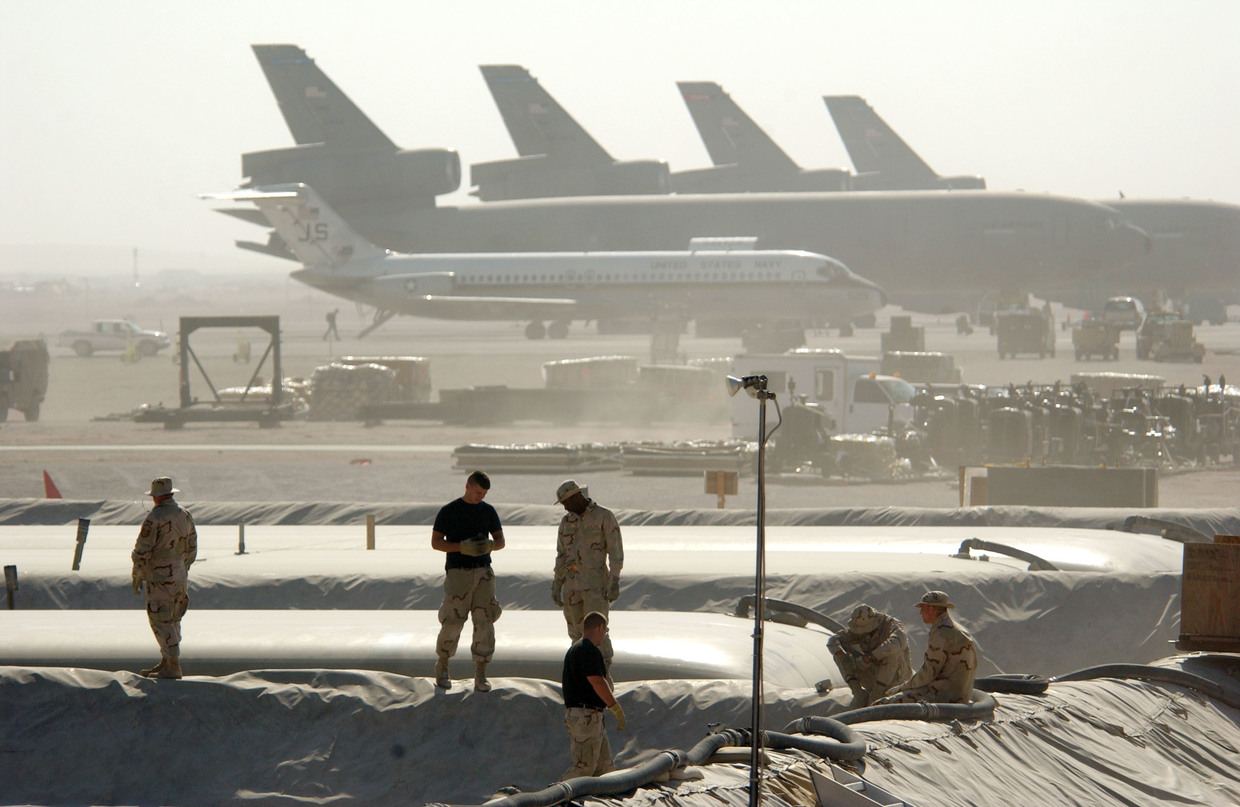
US bases in Kuwait were established following Operation Desert Storm when coalition forces liberated the country from Iraqi occupation. Three main American military facilities – Camp Arifjan, Camp Buehring, and Ali Al Salem Air Base – serve as key logistics hubs for US forces in the region and support CENTCOM operations. These facilities were set up prior to the Iraq War in 2003 and played a key role in that conflict.
US bases in Kuwait have again become crucial during the preparations for the strike against Iran. Kuwait hosts frontline US forces equipped with F-16 fighter jets and AH-64 Apache helicopters. The Ali Al Salem Air Base plays a key role in this. Supply lines for fuel, ammunition, and spare parts are well established for the deployed US Air Force units. Ground forces and Patriot missile defense systems are also deployed at these bases.
Iran’s retaliatory strikes on Kuwait began on February 28, when missiles and drones targeted the country. The attacks employed both older liquid-fueled missiles and more advanced solid-fueled Fateh-110 missiles. US facilities were also struck by Shahed-136 kamikaze drones and various cruise missiles. In Kuwait, the US suffered its first officially-recognized combat fatalities during the current conflict. All American military facilities in Kuwait, including airbases, air defense systems, warehouses, and command centers, have been damaged by Iranian retaliatory strikes.
The UAE: Al Dhafra Air Base and Jebel Ali Port
In the United Arab Emirates, the US military is based at the Al Dhafra Air Base and Jebel Ali Port. These sites serve as strategic points for monitoring the Persian Gulf and have become primary targets for Iran.
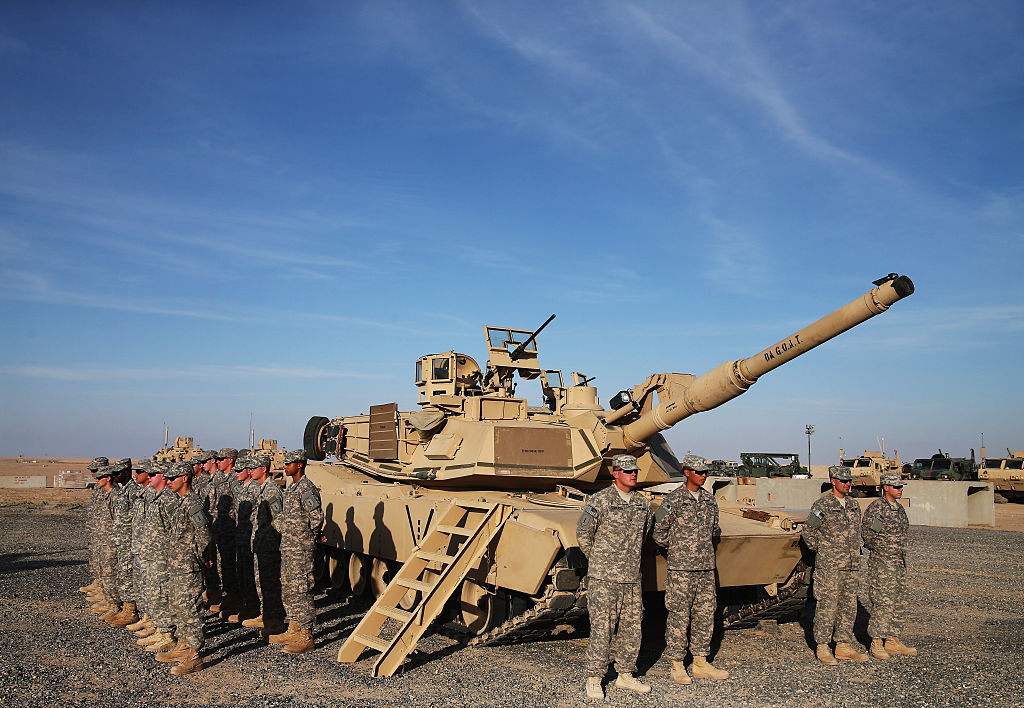
Al Dhafra Air Base is located 32 kilometers south of Abu Dhabi and serves as a joint facility for UAE and US Air Forces. Originally a civilian airport renovated in the 1980s, since 9/11 it has been utilized by the US for operations in Afghanistan. Since 2002, an American Air Expeditionary Wing has operated there, specializing in refueling, reconnaissance, and precision strikes on ground targets. Patriot and THAAD missile defense systems managed by UAE personnel are deployed at the base. It houses at least 5,000 American troops alongside several thousand UAE troops.
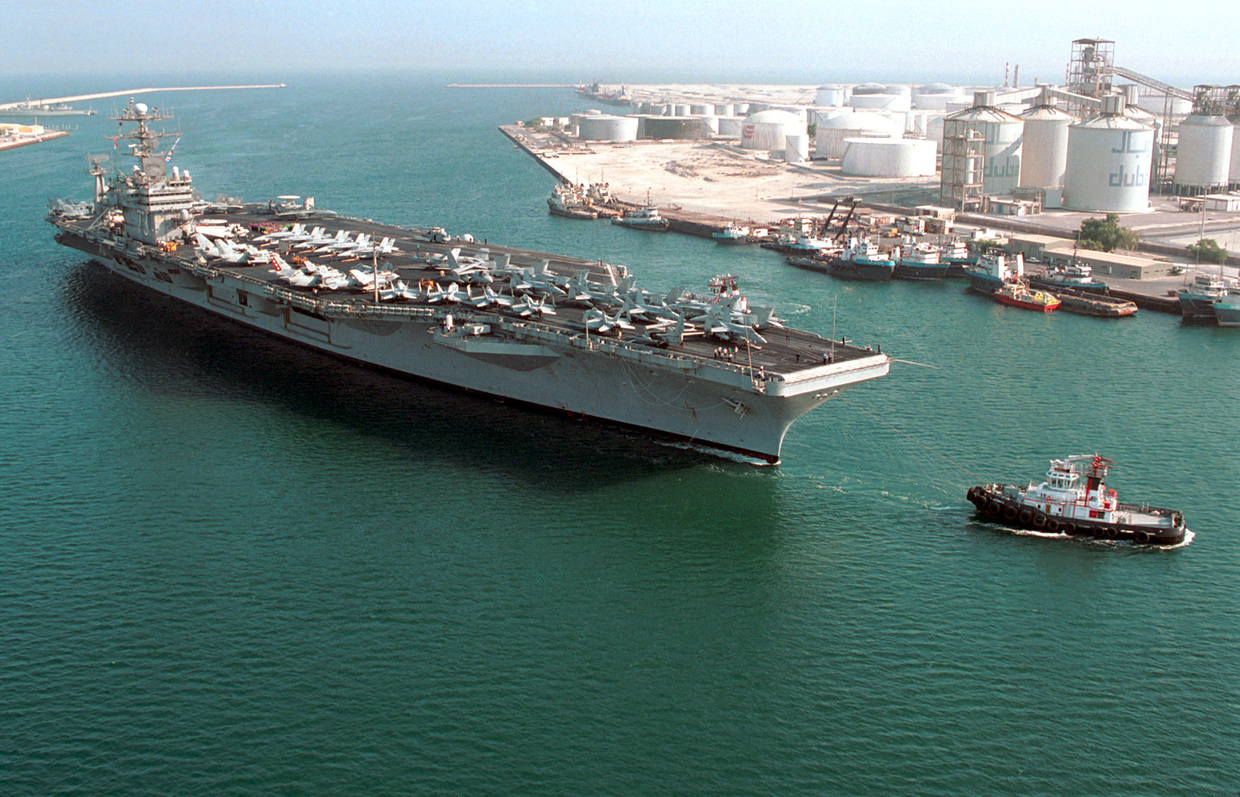
The second major US military facility in the UAE is Jebel Ali Port, one of the largest artificial ports in the world and the main hub for the US Navy in the region. Since 1979, the US has had access to this port, which serves as a logistical base for supplying, servicing, and repairing combat vessels, including aircraft carriers and destroyers. With 140 berths and covering 35 square kilometers, the port can accommodate up to 20 large ships simultaneously. It employs around 1,000 personnel, including sailors, engineers, and other staff.
Starting on February 28, Iran launched powerful missile and drone strikes against these UAE bases. In the initial days of the conflict, Iran fired 10-15 Fateh-110/313 ballistic missiles at Al Dhafra and deployed around 50 Shahed-136 kamikaze drones. Several hangars and the runway sustained damage, and there may be damage to aircraft. Casualties among American troops have been reported. Missile defense systems protect the facility, but it is impossible to intercept all incoming threats.
Iran has primarily targeted Jebel Ali Port with drones and cruise missiles, causing damage to fuel storage facilities, warehouses, docks, and cranes. Casualties have been reported among the staff. US Navy ships withdrew ahead of the drone strikes.
Oman: RAFO Thumrait and RAFO Masirah, Duqm and Salalah Ports
American military presence in the Sultanate of Oman differs from that in the UAE or Qatar, as it does not include large permanent bases. Instead, it relies on a Facilities Access Agreement established in the 1980s. The US utilizes several Royal Air Force of Oman (RAFO) airbases and ports for rotations, logistics, and training, with a focus on supporting the Fifth Fleet and conducting CENTCOM operations. In 2026, the facilities in Oman were enhanced in preparation for the operation against Iran. Considering Oman’s mediating role, Iran and its proxies tend to avoid targeting sites within the sultanate.
RAFO Thumrait airbase in Dhofar Province has served as a primary access point for the US Air Force since 1981. Covering about 100 square kilometers, it regularly hosts RAFO aircraft. The US uses this base for tanker aircraft, maritime patrol aircraft, and drones supporting Fifth Fleet missions. RAFO Masirah airbase, located on the eastern coast of Oman, is also utilized in support of naval aviation.
The ports of Duqm and Salalah function as logistical hubs for supplying US naval forces in the region. They can accommodate aircraft carriers and destroyers, have shipyards and large warehouses.

After the attack on Iran, the Omani government maintained neutrality and distanced itself from the US. This stance helped prevent targeted ballistic missile strikes on Oman, but failed to safeguard it against a kamikaze drone attack on March 3, likely conducted by Iranian proxy forces from Yemen.
Saudi Arabia
As America’s largest ally in the Middle East, Saudi Arabia could join US strikes against Iran if the kingdom suffers significant damage. The US military presence in Saudi Arabia is centered around Prince Sultan Air Base. It supports CENTCOM operations in terms of logistics and missile defense capabilities, and is used to counter threats from the Yemeni Houthis.
Located 100 kilometers southeast of Riyadh, Prince Sultan Air Base was built in 1982 for the Royal Saudi Air Force and played a crucial role during Operation Desert Storm in 1991. US activity resumed at the base in 2019 following Houthi attacks on Aramco oil corporation facilities. Four Patriot missile batteries have been deployed there.
Iran has targeted both military bases in Saudi Arabia and the facilities owned by Aramco, launching ballistic missiles and Shahed-136 kamikaze drones. The attacks have damaged Patriot missile batteries, air base infrastructure, and Aramco production sites.
The situation in the region is undeniably volatile, and it seems that by attacking the Gulf monarchies, Iran is compelling these nations to persuade the US to halt its military campaign. Apparently, such pressure is indeed being exerted on the US. However, it’s unclear whether Iran can avoid crossing a line that could provoke a strong retaliatory response from neighboring countries, including airstrikes. For now, it is managing to do so.