‘Dangerous venture’: World reacts to US-Israel attack on Iran
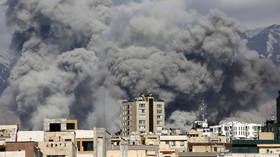
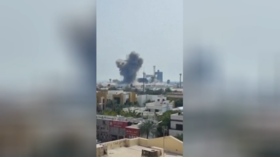
Israel and the US conducted joint strikes on Iran on Saturday that killed Iranian Supreme Leader Ayatollah Ali Khamenei and triggered retaliation from Tehran, plunging the Middle East into renewed conflict.
US President Donald Trump has called the operation necessary so as to protect the American people and prevent a threat from Tehran, while Israeli Prime Minister Benjamin Netanyahu claimed that the attack was a “preemptive measure to defend national security.” The Iranian Foreign Ministry accused Washington and West Jerusalem of violating the UN Charter and vowed a strong response, drawing mixed global reactions.
United Nations
UN Secretary-General Antonio Guterres condemned the strikes, saying that the escalation “undermines international peace and security” and risks pushing the Middle East towards a broader war. Guterres warned that failing to halt the violence could lead to “a wider regional conflict with grave consequences for civilians and regional stability.”
Russia
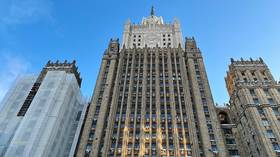
Russia’s Foreign Ministry condemned the US–Israeli strikes on Iran as a violation of international law and the UN Charter, warning that the attacks risk further destabilizing the entire region and calling for an immediate return to diplomacy. The ministry stressed that the attack is “a dangerous venture that is rapidly bringing the region closer to a humanitarian, economic, and, possibly, radiological catastrophe.”
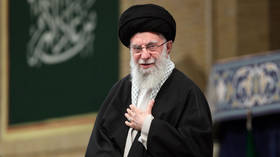
Russian President Vladimir Putin on Sunday expressed condolences over the assassination of Iran’s supreme leader Ayatollah Ali Khamenei in the strikes on the country.
Dmitry Medvedev, deputy chairman of the Security Council, accused Washington of using nuclear negotiations with Tehran as a cover for subsequent military operations.
China
China’s Ministry of Foreign Affairs urged for “an immediate halt to military actions” and appealed for “the resumption of dialogue and negotiations” to maintain regional peace and stability. It stressed that “Iran’s national sovereignty, security and territorial integrity should be respected.”
India
Indian Foreign Ministry urged “all sides to exercise restraint, avoid escalation, and prioritize the safety of civilians.” It added that “dialogue and diplomacy should be pursued as sovereignty and territorial integrity of all states must be respected.”
Brazil
The Brazilian authorities have condemned the US-Israeli attack against Iran stressing that they took place amid an ongoing negotiation process that is the only viable path to peace. Brasilia has urged for maximum restraint to prevent an escalation of hostilities and to ensure the protection of civilians and civilian infrastructure.
Africa
African Union head Mahamoud Ali Youssouf has called for restraint, urgent de-escalation and sustained dialogue.
“Further escalation risks worsening global instability, with serious implications for energy markets, food security, and economic resilience – particularly in Africa, where conflict and economic pressures remain acute,” he noted.
Yemen
Yemen's Houthi group said that attacks on Iran are part of a broader effort to undermine regional deterrence, warning that the United States and Israel would bear responsibility for the escalation and its impact on regional security.
Israel’s neighbors
Israel’s neighboring countries, including Lebanon and Jordan, criticized the escalation of violence in the region.
Lebanon’s Hezbollah has vowed to “confront aggression” exercised by US and Israel against Iran, while Lebanon’s Prime Minister Nawaf Salam has rejected the prospect of being dragged into war following the strikes on the Islamic Republic.
Meanwhile, the Ministry of Foreign Affairs has condemned the Iranian ballistic missile attack on Jordanian territory, as well as attacks targeting UAE, Bahrain, Qatar and Kuwait, expressing the country’s “absolute solidarity” with the affected Gulf states.
Malaysia
The Malaysian Foreign Ministry has also strongly condemned the attacks, saying they violate the principles of sovereignty and territorial integrity, as well as the prohibition against the use of force under the Charter of the United Nations and international law.
Pakistan
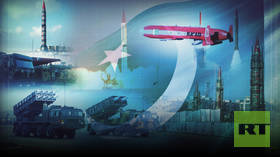
Pakistani Foreign Minister Mohammad Ishaq Dar condemned the “unwarranted attacks” and called for immediate de-escalation. “Islamabad strongly condemned the unwarranted attacks against Iran and called for an immediate halt to escalation through urgent resumption of diplomacy,” he said.
The European Union
The EU authorities have given an expectedly restrained comment on the issue, opting not to condemn the initial strikes by the US and Israel while sharply blasting Tehran for the subsequent retaliation.
European Commission President Ursula von der Leyen and European Council President Antonio Costa have called on all parties to exercise maximum restraint, to protect civilians, and to fully respect international law. Meanwhile, EU foreign policy chief Kaja Kallas described the situation as “perilous” and emphasized the need for diplomatic engagement and de‑escalation.
Britain
UK Prime Minister Keir Starmer has confirmed that Britain did not take part in the US–Israeli strikes. He emphasized that the UK “stands ready” to protect its interests in the region, while making clear that it does not want the crisis to escalate into a wider conflict. Starmer also urged Iran to refrain from further strikes and called for a negotiated solution to address ongoing issues.
Germany
German Chancellor Friedrich Merz emphasized that Berlin remains closely aligned with its European partners. In a joint statement with France and the UK, he condemned Iranian military actions in the region and called on Tehran to cease destabilizing attacks. Merz highlighted the urgent need for diplomacy.
France
French President Emmanuel Macron described the situation as highly dangerous for international peace and security, warning that the recent escalation risks broader conflict. He called for an urgent meeting of the UN Security Council to address the crisis and emphasized the need to protect civilians.
Italy
Italian Prime Minister Giorgia Meloni underscored her commitment to regional stability and the safety of Italian citizens in the Middle East. Foreign Minister Antonio Tajani stressed the protection of Italian nationals, offering consular support and potential evacuations where necessary, while the government expressed solidarity with affected Gulf states and condemned Iranian attacks on them as unjustifiable, advocating for continued diplomatic engagement to reduce tensions.

Spain and Norway
Spain’s Prime Minister Pedro Sanchez and Norway’s Foreign Minister Espen Barth Eide took a more critical stance, warning that the US–Israeli strikes on Iran further escalate tensions and undermine international law. Eide noted that “a pre-emptive strike” would require an imminent threat, while both leaders called for restraint and renewed diplomatic efforts to resolve the conflict.
Global protests
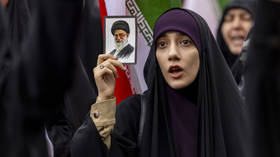
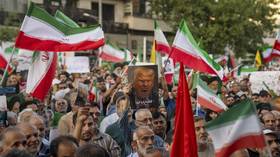
Across multiple regions there have been significant public demonstrations in response to the strikes on Iran. In the Islamic Republic, tens of thousands of people took to the streets to mourn the killing of Supreme Leader Ayatollah Ali Khamenei and to condemn the attacks, with many protesters calling for revenge and denouncing the US and Israel’s actions.
Internationally, pro‑Iranian and anti‑war rallies took place. Iranian diaspora communities held demonstrations in cities including Berlin and Dublin to support the US and Israeli attacks, while elsewhere people turned out to demand peace and an end to foreign intervention in Iran. Additionally, anti‑American protests erupted in Pakistan and Iraq, where crowds demonstrated outside US diplomatic missions, sometimes leading to violent confrontations with security forces.