BRICS discusses interlinking payment systems and digital currencies

BRICS nations are discussing linking their payment systems and central bank digital currencies (CBDCs) as they explore ways to reduce the costs and increase the speed of cross-border payments, Reserve Bank of India (RBI) Governor Sanjay Malhotra said on Tuesday.
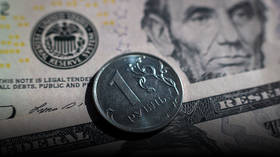
Last week, Indian Trade Minister Piyush Goyal said New Delhi prefers trade settlements in national currencies to a unified monetary system, or a BRICS currency, which has been touted as an alternative to the US dollar.
The Indian central bank chief said on Monday that “cross-border payments is an area of interest for all of us, including the BRICS, because we feel there is a lot of scope for reducing cost.” He added that various options are being discussed, including CBDCs (central bank digital currencies) and linkages of fast payment systems.
Citing the example of India’s Unified Payments Interface, a real-time payment system, he said, “It is instantaneous. Why do you have to wait for some hours, some days for your foreign remittances to take place?”
The RBI proposed that a plan to link the CBDCs of BRICS countries to make cross-border trade and tourism payments easier be included on the agenda of the group’s 2026 summit, Reuters reported in January, citing sources. India, which hosts the BRICS presidency this year, is hosting the summit September 12-13.
The BRICS group of emerging and developing economies includes the original members, Brazil, Russia, India, China, and South Africa, as well as Egypt, Ethiopia, Iran, Saudi Arabia, the UAE, and Indonesia.
China, India, Russia, and Brazil have already implemented pilot rollouts of CBDCs.
The BRICS countries generate around 40% of the world’s GDP, surpassing that of the G7 group of developed nations.
An alternative payment system that connects these countries would challenge the SWIFT messaging system, which has been weaponized by the West to keep targeted nations out of global payment networks through sanctions and banking bans.